Amazing Glass bends light like glass, not just blur.
The validation method here—comparing your own rendering pixel-by-pixel against a trusted reference—is a technique you could borrow for any platform-matching work you do.

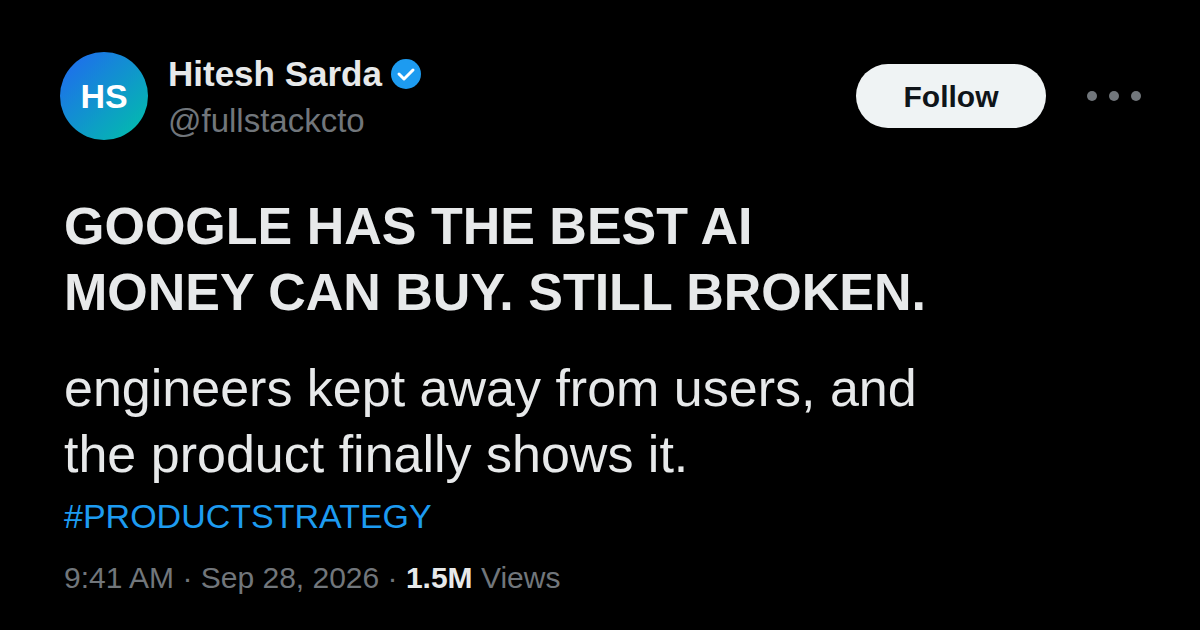
Google Search shows AI integration without product judgment breaks trust.
This gives you a concrete lens for your own AI integration decisions: a capable model placed carelessly against existing user expectations erodes trust faster than a weaker model placed with judgment.

Loading states can be designed as an experience, not hidden.
It reframes loading states as a craft opportunity rather than a problem to eliminate, which is worth revisiting next time you default to a generic spinner.
Meta's Ray-Banglasses erode a heritage brand through poor design choices
It's a sharp reminder that industrial design and trust are non-negotiable in premium categories, no matter how strong the underlying brand equity is.

OpenAI's agent era what ChatGPT leadership sees changing next
If agent-based interaction becomes the default surface, you'll need to rethink how your product exposes functionality beyond traditional screens and flows.

Rex's Dino Store runs on puns and dinosaurs in the subway
A single operator with one relentless theme shows how far constraint and personality can carry a concept past anything generic.

Productivity systems fit conditions, not the reverse.
The framing that conditions—not tools—should shape your working system is worth stealing even though the specifics don't map to running an independent studio.
Amazing Glass bends light like glass, not just blur.
The validation method here—comparing your own rendering pixel-by-pixel against a trusted reference—is a technique you could borrow for any platform-matching work you do.
Open the Amazing Glass writeup and look at how they validated their CSS/WebGL effect pixel-by-pixel against Apple's reference; try the same comparison technique on one effect in your own interface.