When code is cheap design becomes the constraint at Anthropic
As your own tools compress build time, this gives you language for why the hard part of your job is now deciding what's worth making, not making it.

A flame needs three sine waves how one designer reverse-engineered motion from a real object
A concrete discipline for motion work: observe the real thing, reduce it to the fewest geometric truths, then code only what you actually saw.

Taste is not the moat—judgment is
Gives you a way to argue for a craft decision in a meeting using judgment and evidence instead of retreating to 'I like it' when taste alone won't hold.
AnatomyClaude built a skill to explain ideas as working machines
A new explanatory medium worth testing: build the object itself as the diagram so there's no hand-waving left in how you explain a mechanism.
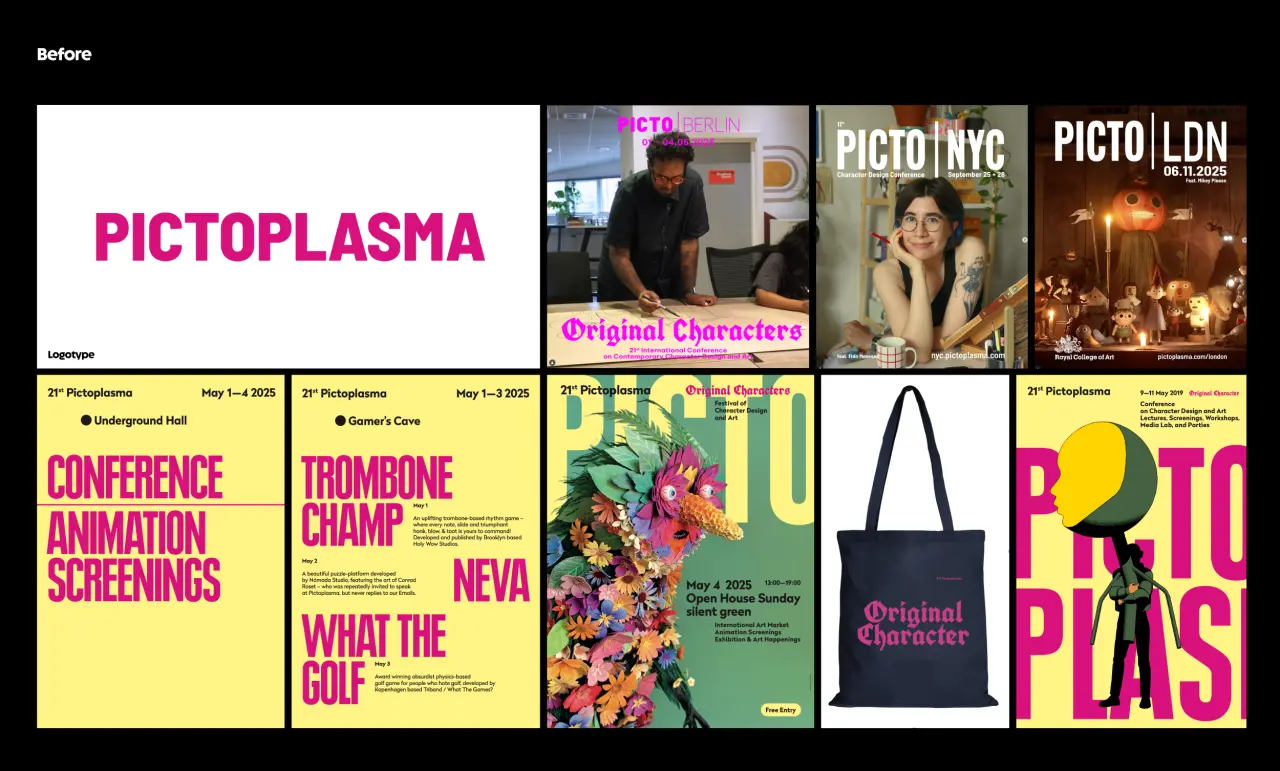
Pictoplasma finds fresh personality in two dots of type, staying out of the way
A clean example of getting personality from one small cognitive trick instead of adding visual decoration, worth studying before your next identity project.
Ben Ganz on designing across disciplines

Watching how a working art director actually assembles a visual language from scattered references is more useful than any mood-board tutorial.
shadcn/ui adds Trace and AI Elements for agent interfaces
Ready-made patterns for showing agent reasoning and tool calls save you from improvising agent UI conventions from scratch.

TinyLittleOffice office tools that save everything in the URL
The URL-as-storage trick is a pattern you could lift directly for small shareable tools that need no backend at all.
When code is cheap design becomes the constraint at Anthropic
As your own tools compress build time, this gives you language for why the hard part of your job is now deciding what's worth making, not making it.
Watch the matchstick flame breakdown, then pick one motion detail in something you're building and try describing the real-world physics behind it in three shapes before writing any animation code.